


When a friend or a therapist says “just be present,” what does that mean to you?
I ask because I had no idea for 39 years (and I’m still not sure I’ve got it right).
I’ve always had a thousand thoughts competing for attention in my mind, and while a lot of people dwell in the past, I lived in the future.
“When this happens” and “when I finally” were constant thoughts in my mind.
The present? Who has the time for that when you’re working towards goals you’ll achieve in the future?!
Then I met my horse.
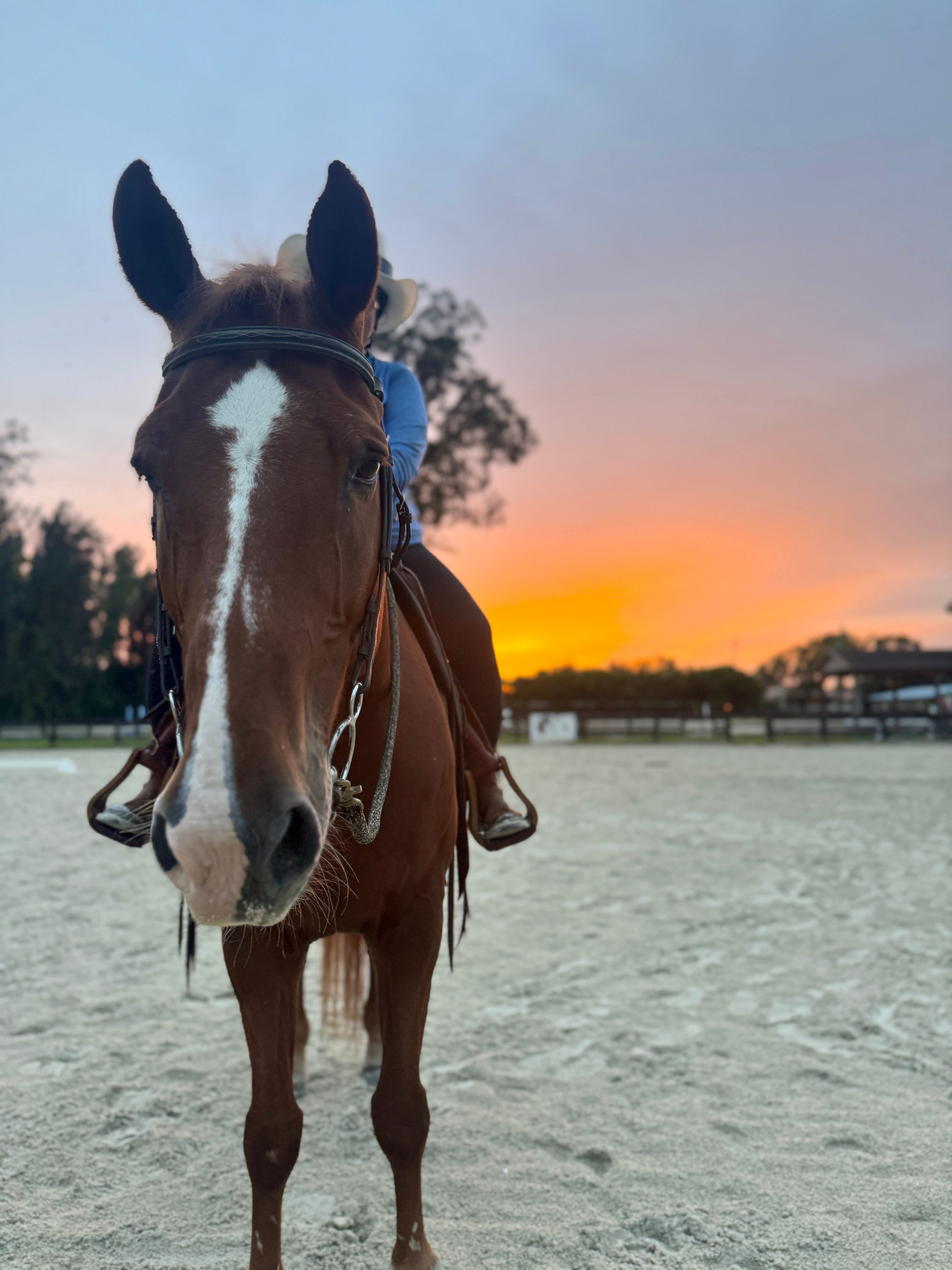
It turns out when you’re working with a 1300lb animal, you have to be really present. If you’re not, you might miss the subtle signs that your horse is getting frustrated, and that can lead to a fractured leg and a fractured bond.
My trainer, Erin, developed the 4-F’s Framework: Focus, Feel, Follow Through, and Freedom to help humans communicate with horses better.
Focus says you must be mentally present and stay focused throughout the conversation with your horse.
I was really bad at this.
I’d hear Erin give me a goal, “Have Geno trot in a circle,” and I’d be focused on just two things:
Did he take the first step in moving in a circle?
Did we pass or fail at the ultimate goal of trotting in a circle?
Once Geno was off on the first step, I’d be completely focused on the end goal and miss all the subtle cues in between that require mental presence.
I’d hear Erin say, “he’s checking in with you; that’s nice,” and “Look at his head movement, he’s telling you that he thinks this is a dumb idea to go in circles, but he’ll do it for you.”
I’d say, “Mmmhmm, I see,” but I didn't, in fact, see any of it.
My eyes were on Geno, but they weren’t seeing him; my mind’s eye was just playing what I wanted to happen over and over, and I wasn’t paying attention to what was actually happening.
These days, I’m locked into the conversation.
I was physically present but mentally in the future, and that doesn’t work well when communicating with horses (or humans).
Being goal-oriented is great; of course, I want to improve my horsemanship, make my trainer proud, and help my horse be his best, but… I was missing so many cues by living three steps in the future, and those cues were pretty important.
Not just because they tell me when Geno has a question like “should I keep going?” Allowing me to answer with “yes, keep going” instead of him thinking I’m ignoring him and making his own decision to just stop and me going “ERIN WHY DID HE STOP???”
Being present and aware of his nonverbal communication allows me to stay in the conversation.
Beyond that, when he checks in with me, it shows he sees me as a leader worth checking in with, and that’s so important for our bond because it will ultimately help manage spooking that can lead to horse and human injury.
I was missing out on making life so much easier by not being present, and I know if I was doing that with Geno, I was doing it with the humans in my life too.
Now that I know what “being present” actually feels like and what it gives me, I’m trying to be more present in all areas of my life because I see the benefits.
Geno’s only been my horse for six months, but our bond is already quite strong.
I was so happy the other day when I went to turn my camera off after filming one of our sessions; he could've done whatever he wanted, but he chose to follow me.
I doubt our bond could have developed like this if I had stayed physically present but mentally three steps in the future.
Actually, I’m sure because being in a two-way conversation with him makes me trust him more.
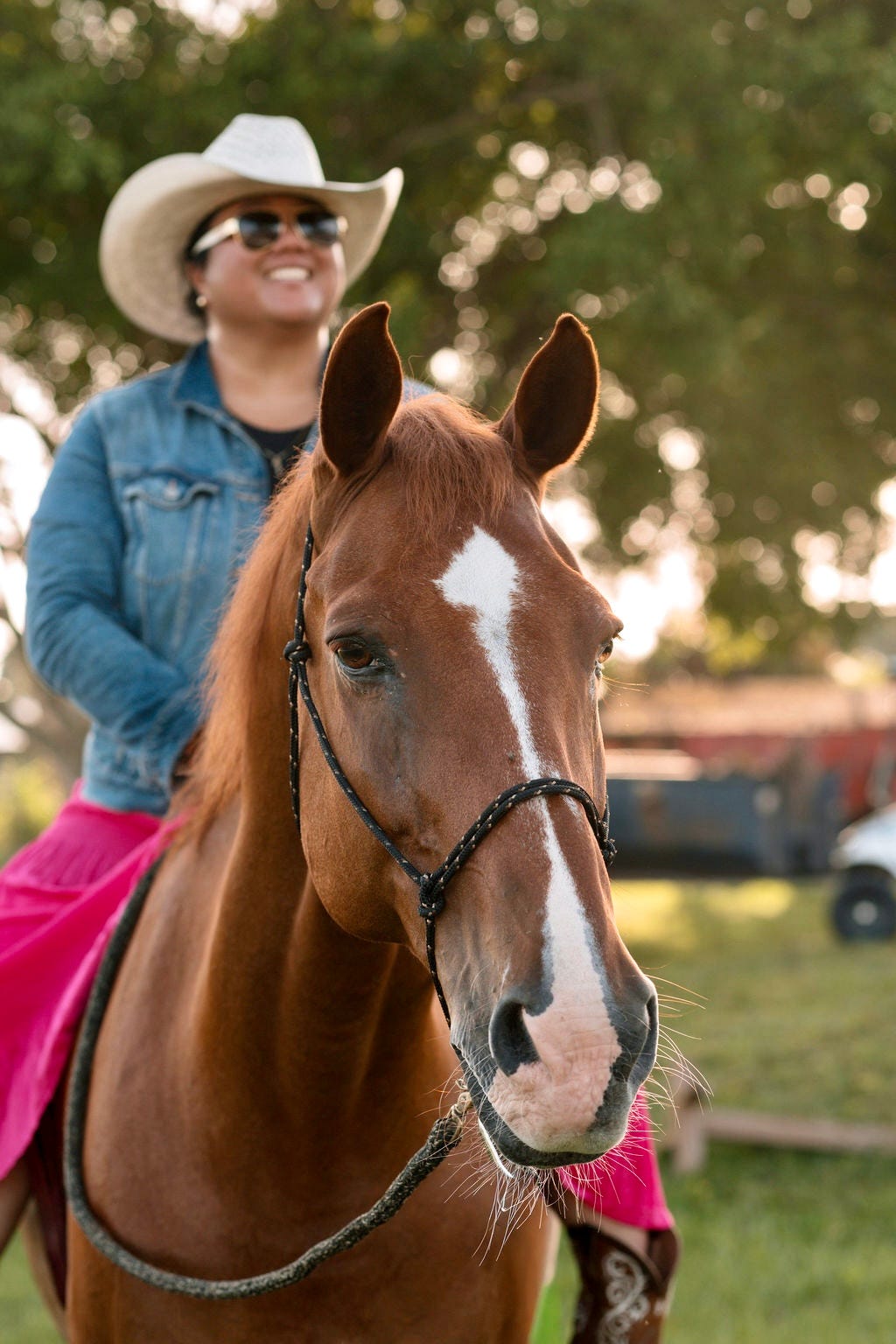
When we were at an obstacle course clinic last month, the trainer said: “Don’t use your reins. Hold your reins out, use your legs, and trust your horse.”
I thought, “Right, I know Geno is anxious right now, but I do trust him,” so I thanked God for giving me Lexapro, then stuck my arms out so I wouldn’t be tempted to use my reins.
That trust was there because I could tell Geno was anxious, but I also know the exact sequence he goes through when he’s gonna spook and what he does when he’s spooked.
His head pops up, his ears go alert, he stands statue still at attention for a second, and then he rears up if he decides the moment calls for it. He’s also good at calming himself down after he rears one time.
I wouldn’t know that sequence if I wasn’t so present with him every time it’s happened, and therefore I wouldn’t be able to trust him or myself in situations where we’re both being asked to stretch our comfort zones.
Now, could Geno spook and not go through that process because an actual lion pops out of the bushes and starts chasing us? Sure, but in the situation we were in, I felt the likelihood of that was small.
What the research says on being present and forming bonds
I started this post asking what it means to you to be present because I’m just starting to figure it out on my own.
Turns out researchers have a specific answer:
“The concept of mindfulness generally has been conceptualized in the scientific literature as fundamentally involving a highly receptive, nonjudgmental awareness of and attention to whatever is present in the moment — whether pleasant, unpleasant, or neutral.”
Licensed clinical social worker Czoe Smith says, “When you’re present in a moment, you enjoy what is right in front of you.” She says these moments improve relationships and foster trust.
The challenge is that we live in a world of distractions and experience FOMO, making it hard to stay present.
Lord knows that’s true!
But the benefits of staying present are enormous.
Researchers have found that “trust and well-being reinforce each other in a dynamic feedback loop,” and that trust is strongly linked to life satisfaction.
It makes sense: when you trust others, you believe you are surrounded by people (and animals) who give you comfort, security, and support.
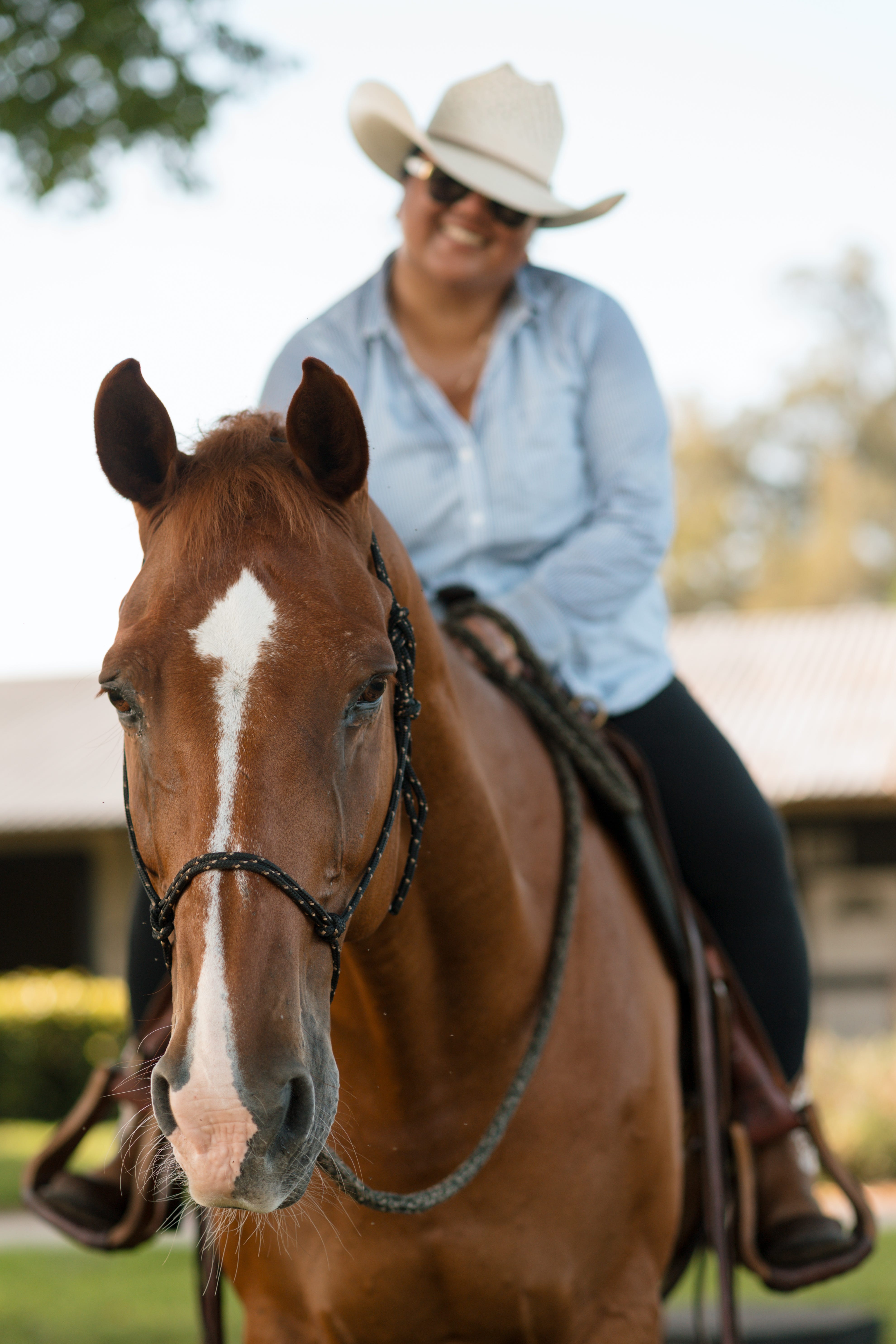
That’s what I want Geno to feel when he’s with me (and yeah, the humans in my life, too).
It’s funny how “being present” should be the most natural thing in the world, but it’s something we have to practice.
Anyway…I love my horse.
Bye bye till next post!